
Unvented cylinder service in Barnstaple
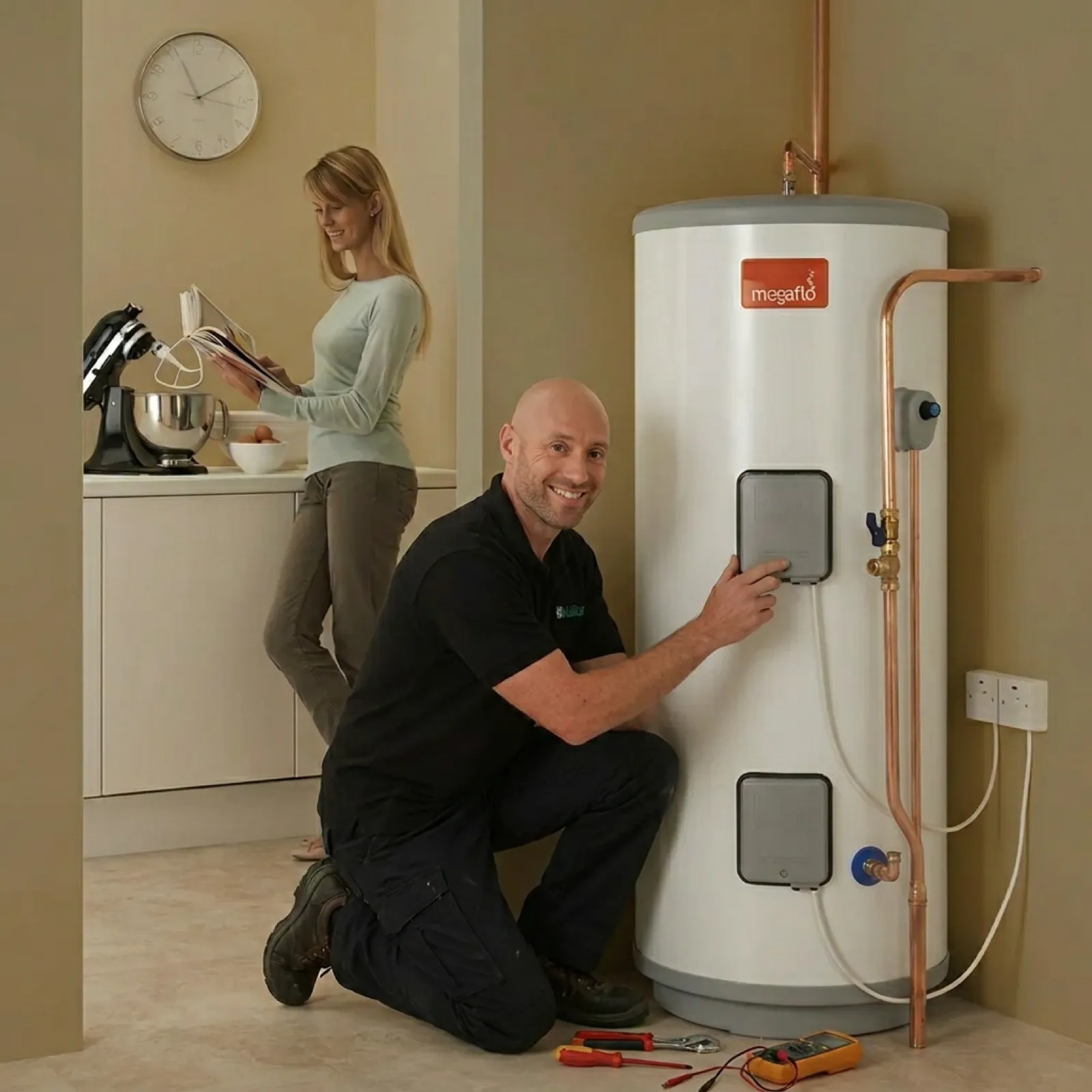
I'm George Lane, a Gas Safe engineer based in North Devon. I'm G3 qualified, and I service and repair unvented hot-water cylinders in Barnstaple.
- Cylinder service £105 including VAT
- By a G3-qualified engineer
- Travel to Barnstaple included
Prefer to write? Send an enquiry.

George Lane, Gas Safe No. 515374. Fully insured, 25+ years on boilers. I do every job myself, from the first visit to the finished work.
If you smell gas, leave the property and call the National Gas Emergency number, 0800 111 999, before anything else. Once the supply has been made safe, I can come and deal with the appliance.
What my customers say
5.0 from 103 Google reviews for Thames Boilers, my previous business in Kent
Tarka Boilers is new to North Devon, so it has no reviews of its own yet. Every review here is from a customer of Thames Boilers, the heating business I ran in Kent before I moved here.
Read all 124 reviewsAlways great service from George at Thames Boilers. I had a problem with hot water only coming on when we put the heating on .. George arrived when he said he would and was able to diagnose the issue and fix it in a single call out. I really can't recommend George and Thames boilers enough. Thanks again Gavin
Gavin M.Google review, January 2025Customer of Thames Boilers, Kent We had an issue with our hot water and in combination with the Evohome system. George resolved the issue and looked at a few other side issues promptly an easily solving the problem. Would definitely recommend.
Google reviewerGoogle review, June 2025Customer of Thames Boilers, Kent George was absolutely brilliant, and worked like a trooper long into the night on 1st day to ensure we had heating and hot water. He was very courteous and polite and was clear in his quote and the work he undertook. We would thoroughly recommend him. K&J Jones
Checkatrade reviewerCheckatrade review, March 2019Customer of Thames Boilers, Kent Excellent service, all problems have been fixed, full service carried out,in fact more was done than British gas have done over several years. I would recommend Thames boilers without any hesitation. Well done and thank you.
Brian P.Google review, May 2026Customer of Thames Boilers, Kent
- Gas Safe No. 515374Check it on the Gas Safe Register
- 25+ yearson boilers and heating
- G3 qualifiedfor unvented hot-water cylinders
- Fully insuredGeorge Lane trading as Tarka Boilers
I work on Worcester Bosch, Vaillant, Baxi, Ideal, Glow-worm, Potterton and Viessmann. Mains-gas boilers only: I don't work on oil or LPG, and I don't fit new boilers.
Prices for unvented cylinder service and repair in Barnstaple
Every price includes VAT and travel.
Unvented cylinder service
£105including VATOne standard annual unvented hot-water cylinder service.
Boiler service and unvented cylinder service
£157including VATBoth services during the same visit; the cylinder service is reduced to £52, saving £53.
Full boiler service and unvented cylinder service
£237including VATBoth services during the same visit; the cylinder service is reduced to £52, saving £53.
Fixed-price unvented cylinder repair, labour
£220including VATAll the labour to get your unvented cylinder working again, however long it takes, including travel and any return visit to fit a part. Parts are priced before they're fitted.
Unvented cylinder repair, diagnosis only
£105including VATIf you decide not to go ahead, or it can't sensibly be repaired, you only pay this for the visit, travel and finding the fault.
Travel to Barnstaple is included in every price.
Every price includes VAT. Repairs are £220 for all the labour, however long it takes, and parts are priced before they're fitted. Decide not to go ahead, and you only pay £105 for the visit.
Unvented cylinder service and repair in Barnstaple
An unvented cylinder service in Barnstaple is £105 including VAT, or £52 when I do it on the same visit as a boiler service. I'm George Lane of Tarka Boilers, G3 qualified and Gas Safe registered (No. 515374), based in North Devon and covering EX31 and EX32.
Fixed-price cylinder repair: £220 including VAT for all the labour to get your hot water working again, however long it takes. Parts are priced before they're fitted. Decide not to go ahead, and you only pay £105 for the visit. Book online or call 01271 444410.
How booking works
You book
Book online and your time is confirmed straight away. I work Monday to Friday, 9am to 5pm, and I'm not an emergency service. If it isn't a job for me, I'll say so and point you to someone who can help, rather than going quiet on you.
You'll know when I'm coming
You choose a start time when you book, not a morning or an afternoon. It is an estimate, because the job before yours can finish early or run on. When I set off to you, you get a text with a link that shows where I am, so you can see when I'll be at the door.
Properties in Barnstaple with unvented cylinders
Unvented cylinders are common in larger modern houses with two bathrooms or more, including many on the newer estates, and in older houses where a vented system has been upgraded. If you have a cylinder with no cold water tank in the loft, it's probably unvented. A label on the cylinder usually says so.
Why does an unvented cylinder need a yearly service?
An unvented cylinder holds hot water at mains pressure, with safety valves that have to work the one time they're needed. Manufacturers require an annual service by a G3-qualified engineer to keep the warranty, and the service is what proves those valves still open and close.
What the service covers
Expansion vessel. I check the air charge against what the cylinder needs and recharge it if it's low. A flat vessel is the usual reason a discharge pipe drips.
Pressure relief valve and the temperature and pressure relief valve. Each is lifted by hand to check it opens and seats again cleanly.
Pressure reducing valve and strainer. I check the incoming pressure is where the cylinder wants it and that the strainer isn't choking the cold feed.
Thermostats. I check the cylinder is holding a safe storage temperature, and that the overheat cut-out hasn't tripped.
Tundish and discharge pipe. I check the tundish is visible and clear, and that the discharge pipe runs safely to the outside.
You get a written service record. If a valve or the vessel needs replacing, I price it before I do the work.
Signs something is wrong with the cylinder
Water running into the tundish. One of the relief valves is letting go. Most often the expansion vessel has lost its charge, so pressure climbs every time the water heats.
No hot water, or lukewarm water. A failed immersion element or thermostat, a stuck motorised valve, or a problem on the boiler side.
Hot water that takes much longer to come back. Scale on an immersion element, or a coil that isn't getting enough heat from the boiler.
FAQs: unvented cylinder service and repair in Barnstaple
Can you service the boiler and the cylinder on one visit?
Yes. A standard gas boiler service and unvented cylinder service on the same visit is £157, instead of £210 booked separately. With the full gas boiler service it is £237, instead of £290. Both prices include VAT. It costs less because it's one visit instead of two, and it can't be combined with any other reduction.
Do you install new unvented cylinders?
No. I service and repair them. Fitting a new cylinder is installation work, which I don't do.
My discharge pipe drips now and then. Is it dangerous?
It's a sign a safety valve is opening, which means something is not right. Book a visit rather than leave it. If it runs continuously or the cylinder is hotter than normal, turn off the heat to the cylinder and call.
Unvented cylinders near Barnstaple
I service unvented cylinders in every town I cover. See the town pages for Fremington, Braunton, Bideford and South Molton.
Other services in Barnstaple
See all services in Barnstaple- Boiler repairsMains-gas boiler faults found and fixed for one fixed labour price, however long it takes, with parts priced before they're fitted.
- Boiler servicingYearly gas boiler services: a standard service, or a full service with a new burner gasket and a full clean.
- Landlord gas safety checksLandlord gas safety checks and certificates for rented homes, with a reminder when the next is due.
- Smart thermostat installationHive, Tado and Nest thermostats fitted and set up by a Gas Safe engineer, priced before I start.
- Central heating repairsCold radiators, noisy pipes, pumps, valves and pressure that will not hold, found and fixed.
Unvented cylinder service and repair in Barnstaple?
Every price includes VAT. Repairs are £220 for all the labour, however long it takes, and parts are priced before they're fitted. Decide not to go ahead, and you only pay £105 for the visit. Travel to Barnstaple is included in every price.
Prefer to write? Send an enquiry.